Male Infertility: Ayurvedic Solutions That Improve Fertility Naturally
Every month, the pregnancy test results are negative. Initially, you thought it was just a matter of time. After that, you began tracking your ovulation closely. There was no sign of it. It's been six months. After that, a year has passed.
Questions are posed by the family. Friends who are well-meaning. "Any positive news?" they ask hopefully. Each time, they make you feel a bit smaller.
Your spouse goes through test after test. “All is well” from her perspective. But then the spotlight shifts towards the person you are. There's a sudden attention on the quality of your fertility, your maleness and your potential to be a father.
There's a fact that most don't speak about: 40-50 percent of couples who struggle to get pregnant, male influences can be a factor. Nearly 50. We don't often hear about it since men do not discuss the issue. Men suffer in silence, bearing the burden of shame and guilt all on their own.
However, here's what you have to understand: Male infertility is not a death sentence. It is often the case that it's possible to improve or reverse by an appropriate strategy. That's precisely what we're talking about.
What is Male Infertility?
We must be crystal clear on what we're talking about. Infertility in men doesn't mean that the person is sterile or is unable to have children. Simply, it means that there's an inability to induce the conception of a female fertile spouse.
This could be the result of:
- Insufficient sperm count. Not enough sperm present in your semen.
- Low sperm motility which don't swim as well, or move at a slow pace in order to reach the egg.
- Abnormal sperm morphology, sperms with strange shapes aren't able to fertilize eggs properly.
- Semen volume is low, not enough fluid to transport sperm efficiently.
- Hormonal imbalances which affect the production of sperm.
- Physical obstacles that block Sperm from being released.
- Erectile dysfunction or premature ejaculation making conception difficult.
The most frustrating part is that infertility among males often presents little or no evidence. It is possible to feel fine. It could appear normal. There's no way to know that there's something wrong until you try to get the birth of a child.
Signs That Might Indicate Fertility Issues
Although many men do not show any indications whatsoever, some are able to notice certain signs:
- One obvious sign is that you've been trying to get pregnant for the past year or so without being successful. It is a primary sign.
- Sexual issues - Problems keeping erections in check, slow the ejaculation process, less sex drive or trouble in getting ejaculated.
- Swelling or pain - Discomfort around the testicle although this isn't as frequent.
- Hormonal indicators - Less hair growth on your body or facial area and breast tissue growth (gynecomastia) and other indications of a hormone imbalance.
- A lack of energy, constant exhaustion, weak tiredness constantly.
- Recurring respiratory infections could be a sign of some genetic or chromosomal issues.
- Variations in the size of the testicle Small or soft testicles.
In reality, males discover issues with fertility by testing. This is the reason that if you've been trying for a long time without results, you should have a test.
What Causes Male Infertility?
Infertility in men isn't always the result of one single factor. The cause is usually a mix of multiple causes. Let me breakdown the factors:
Lifestyle Factors (The Controllable Ones)
- Smoking causes DNA damage to sperm. It reduces the number of sperm cells and decreases motility. Smoking cigarettes can be a hindrance to the goals of fertility.
- Alcohol-related drinking (2+ drinks a day) drastically reduces testosterone levels as well as production of sperm. The liver isn't able to handle alcohol, and also support the optimal hormone production simultaneously.
- Processed foods as well as trans fats, excess sugar consumption, and a lack of vegetables and fruits - all of these contribute to poor health of the sperm. Your food choices are everything you eat and so will your sperm.
- Fat converts testosterone into estrogen. This also raises scrotal temperatures. Both reduce fertility.
- Insufficient training can impact levels of testosterone, circulation as well as general well-being.
- Temperature exposure, tight clothing and putting laptops on your laps, taking long hot baths and sitting for extended time periods can cause your testicles to overheat. Sperm production needs cooler temperatures than your body's temperature.
- Chronic stress increases cortisol levels, which reduce testosterone levels and interrupts the hormonal cycle that's necessary to make sperm.
- The body is the main source of testosterone when you are asleep. A lack of sleep for a long time can lead to the presence of testosterone in your body for a long time.
- The use of cocaine, marijuana, and anabolic steroids can all harm fertility. Steroids have a particular risk to fertility.
- Pesticides, heavy metals and chemicals found within plastics. Constant exposure leads to.
Medical and Physical Causes
- Varicocele - Swollen veins in your scrotum, like varicose veins. It is found in approximately 15% of males however, it is seen in 40% of those suffering from infertility. The increase in temperature of the testicle decreases the production of sperm.
- Hormonal problems - low testosterone levels, thyroid disorders, pituitary gland disorders, prolactin levels that are high each affect the production of sperm.
- Infections - Past STIs mumps, prostatitis chronic, or urinary infections could harm the reproductive tract and interfere with the production of sperm.
- Retrograde Ejaculation - Semen goes into the bladder, but does not come out through the penis. This can result from the effects of diabetes, medication or surgical procedures.
- Antibodies - Occasionally, the immune system is mistakenly attacking the sperm of your own, treating you as invaders from another country.
- Genetic causes - Chromosomal anomalies are less prevalent, but may affect the production of sperm.
- Medical Treatments - Blood pressure medications, antidepressants chemotherapy and other anti-androgens may lower fertility.
- Prior surgery - Operations on testicles or prostatic inguinal hernias and bladder may impact the fertility.
The condition affects blood flow and nerve function which affects both erectile function and the quality of sperm.
Psychological Factors (The Often Overlooked Ones)
- Stress from performance - Pressure to get pregnant can lead to it difficult to imagine. The stress-related cycle that can affect the quality of sperm and sexual function.
- Depression affects hormone levels and reduces the quantity of sperm as well as its quality.
- Relationship stress - Problems with your spouse can create physical stress and mental strain that manifests in the form of.
- Stress from work - Constant stress, long working hours, inability to balance work and life all take a hit.
The connection between mind and body in the process of fertility is incredibly deep and frequently overlooked.
How Ayurveda Understands Male Infertility?
Ayurveda is a specialized knowledge of male fertility that is more than just the number of sperm.
In Ayurveda fertility, it is determined by Shukra Dhatu - your reproductive tissue. However, here's the most important point: Shukra Dhatu is the seventh and the final organ in the human body. As per Ayurvedic science, it's made when all the other tissues are being fed.
7 tissues (Dhatus) ordered are:
- Rasa (plasma)
- Rakta (blood)
- Mamsa (muscle)
- Meda (fat)
- Asthi (bone)
- Majja (marrow)
- Shukra (reproductive tissue)
If any of your earlier tissues are malnourished or weak, Shukra Dhatu suffers. That's why Ayurveda isn't only about treating your testicles but also the entire system of your body.
The Ayurvedic Perspective on What Goes Wrong
Agni that is weak (Digestive fire) When digestion is shaky, nutrients don't get properly extracted from foods. If you don't have the right building materials the body isn't able to build high-quality tissues. That includes reproductive tissue.
Dosha Imbalances:
Vata imbalance causes an anxiety-like state, dryness and lack of circulation, and alters the motility of sperm.
Pitta imbalance causes extreme heat and inflammation, harming the production of sperm.
Kapha imbalance causes slow metabolism, sluggishness and a decrease in the quality of sperm.
Low Ojas - Ojas is the vital element of you and your immune system, as well as your reproduction strength. Ojas is depleted due to:
- Overwork and stress
- Poor sleep
- Sexual activity that is excessive
- Injuries or illnesses
- Mental trauma
If Ojas is insufficient the fertility is affected.
Ama (Toxins) - Insufficiency in digestion causes ama - a partly digested food which becomes poisonous. Toxins circulate throughout the body, and may cause harm to every organ which includes reproductive tissue.
The beauty of this model is that it clarifies how two males who have the same number of sperm may have quite differing fertility results. This isn't just about numbers, but rather the overall health of a person.
How Ayurveda Improves Male Fertility?
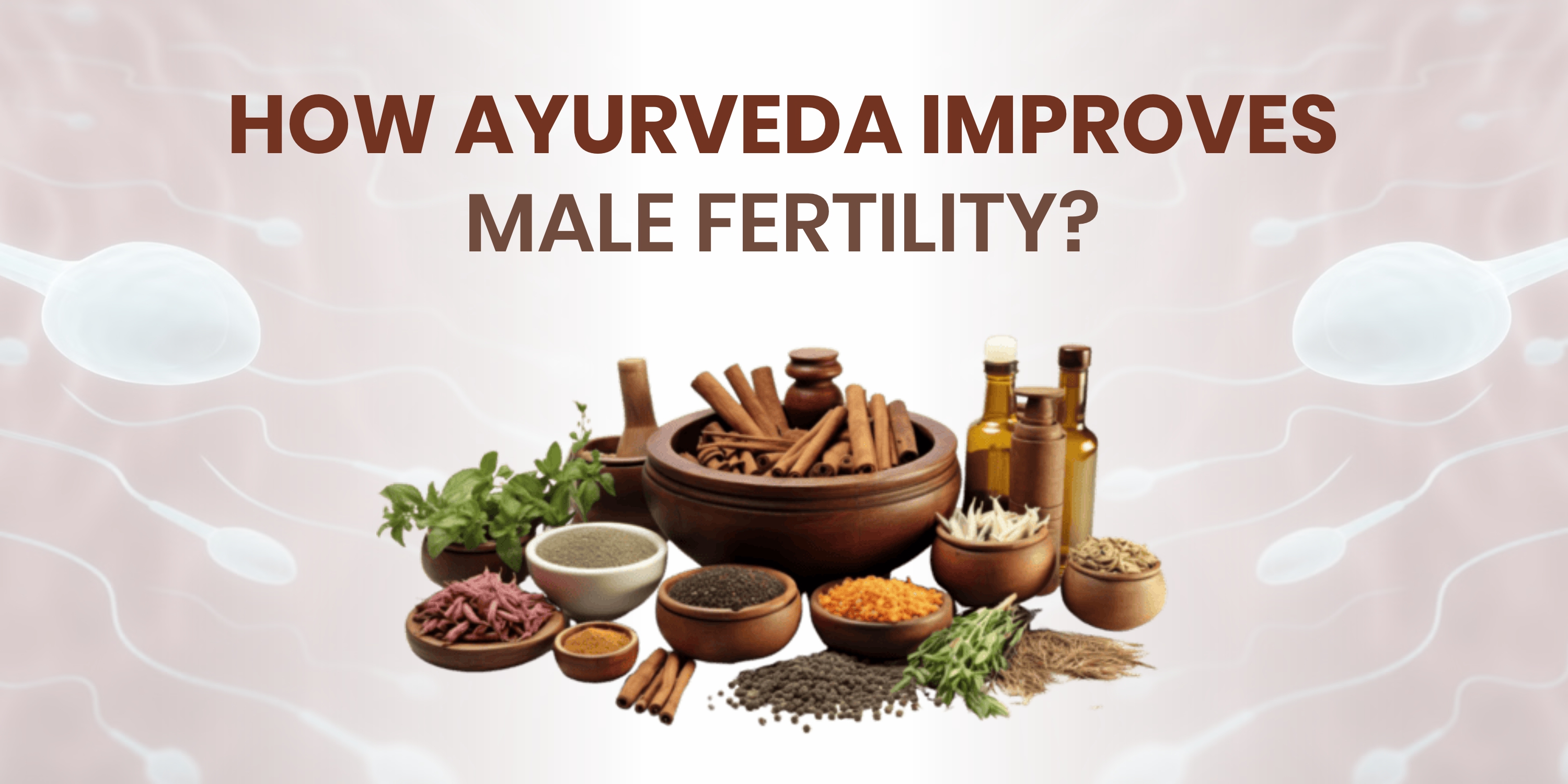
Ayurvedic fertility treatments work at multiple levels that are interconnected:
- Strengthening Digestive Fire
In the first place, Ayurveda ensures your digestion is in good shape. Since if you aren't able to digest nutrients and absorb them correctly, no amount of supplementation or herbal remedies will be of much help.
Herbs such as Trikatu (three spices) as well as ginger and certain formulations are utilized to rekindle Agni.
- Nourishing All Seven Tissues
With specific foods and herbs, Ayurveda systematically nourishes each cell layer, eventually building solid well-being Shukra Dhatu.
It's not about imposing the production of more sperm. The goal is to provide your body the ingredients and conditions that it requires to make healthy sperm naturally.
- Balancing Doshas
The customized treatment that is based on the type of your body and imbalance pattern will bring Vata, Pitta, and Kapha back in equilibrium. If doshas are in balance and all bodily functions are improved which includes reproduction.
- Building Ojas
By regenerating herbal remedies (Rasayanas) as well as regular rest, stress-management and nutritious food choices, Ojas is rebuilt. Consider it like the replenishment of your tank.
- Reducing Stress
Adaptogenic herbs aid your body to manage stress more effectively, by decreasing cortisol levels and allowing testosterone to naturally rise.
- Improving Circulation
Improved blood flow into reproductive organs is greater sperm output. Ayurvedic herbal remedies improve microcirculation but without requiring it.
- Hormonal Balance
Instead of artificially altering hormones, Ayurveda supports your body's naturally occurring functioning of the endocrine system. It's slower, but longer-lasting.
Powerful Ayurvedic Herbs for Male Fertility
These are the plants which have been utilized for many centuries, and are currently getting validated by the latest research:
Ashwagandha (Withania somnifera)
Research shows that:
- A study showed that males who were infertile who took Ashwagandha observed their sperm count increasing by 167%.
- Sperm motility increased by 57 percent
- The volume of sperm has increased by 53%.
- Testosterone levels improved
- The cortisol level and stress were significantly reduced.
This herb can be an effective source to boost male fertility.
Shilajit (Mineral Pitch)
What is it:
- Enhances the total number of sperm by as much as 60% In studies
- Enhances the motility of sperm considerably
- There are more than 84 minerals in the mix, which includes the mineral fulvic acid.
- Naturally boosts testosterone
- Improves stamina and energy levels
- It acts as an effective antioxidant, defending sperm against injury
Safed Musli (Chlorophytum borivilianum)
Benefits:
- Improves the quality of sperm and increases the number of sperm.
- Increases sexual performance and increases libido
- Strengthens reproductive tissues
- Enhances endurance and stamina
- Provides vitality to the entire body
Kaunch Beej (Mucuna pruriens, velvet bean)
What is it that makes it unique:
- It contains L-DOPA. This enhances dopamine
- Significantly boosts sperm concentration
- Increases sperm motility
- Promotes healthy testosterone and LH levels
- Lowers stress levels and boosts mood
- Enhances sexual function
Gokshura (Tribulus terrestris)
Key benefits:
- Increases the circulation of reproductive organs
- Natural testosterone production is supported.
- It increases sperm count and motility
- It aids in the erectile process.
- Helps maintain prostate health
Shatavari (Asparagus racemosus)
Though often thought of as a woman's herb, this plant also has benefits for the men in these ways:
- Reproductive tissues are nourished
- Has cooling properties (balances Pitta)
- Provides overall vitality
- Anti-inflammatory benefits
Vidarikanda (Pueraria tuberosa)
Benefits:
- Powerful aphrodisiac
- Enhances sperm count and improves quality
- Improves stamina
- All tissues are nourished.
Important Warning: These medicines are potent. The dosage, the duration, and combination and method of preparation is to be determined by an experienced Ayurvedic doctor. Self-treatment can be unproductive and even dangerous.
The Ayurvedic Diet for Optimal Fertility
The food you eat directly affects the health of your reproductive system. What should you focus on:
Foods That Build Fertility
Milk and Ghee warm milk (organic as much as feasible) and a teaspoon pure Ghee. It is extremely nourishing for Shukra Dhatu. Include saffron, or cardamom.
Dry fruits and nuts:
- Almonds (soak for a night, then peel and consume in the breakfast)
- Walnuts (rich in omega-3)
- Cashews, pistachios
- Dates (excellent for energy)
- Raisins, figs
- Whole grain:
- Brown Oats, wheat, rice
- Quinoa and barley
- Fiber and energy that is sustained.
Fresh fruits:
- Pomegranates (excellent for increasing sperm count)
- Bananas (rich in B vitamins)
- Mangoes (in the season)
- Berries (antioxidants)
Vegetables:
- Greens with dark leafy shades (folate)
- Carrots and beets (improve the quality of blood)
- Sweet potatoes
- Tomatoes (lycopene)
- Asparagus
Seeds:
- The seeds of the pumpkin (zinc)
- Sunflower seeds
- Flax seeds (omega-3)
Fats that are healthy:
- Ghee (clarified butter)
- Coconut oil
- Sesame oil
- Olive oil (in moderation)
Eggs: If Natural sweeteners:
- Raw honey
- Dates paste
Foods to Strictly Avoid
- Junk food and processed foods that are nutritionally deficient, cause toxic substances
- Trans fats are found in bakery, food items, fried products and margarine
- Inflammation caused by excessive sugar and hormonal turmoil
- Products made from soy (in excess) contain phytoestrogens which could cause a disruption to testosterone
- Extremely spicy or oily foods that can aggravate
- Food that is cold, stale or heated food items - difficult to digest, it causes ama.
- Alcohol - Directly harmful to the production of sperm
- Caffeine (excess) Amounts of more than 2 cups a day can impact the fertility of a person.
Eating Principles
- Enjoy warm, fresh, cooked at home dinners
- Make lunch your largest meal
- Have a light dinner and eat 3-4 hours prior to going to bed
- Enjoy thoroughly, and then take your time eating
- Do not eat when you are stressed.
- Take warm water and not ice cold.
Lifestyle Changes for Better Fertility
Sleep: The Foundation
Sleep for 7-8 hours each at night. In a room that is dark. Sleep until 11pm. Your testosterone production peaks during deep sleep phases.
Exercise: Find the Balance
Moderate exercise boosts testosterone. The excess exercise may lower testosterone levels.
Most effective for fertility:
- Each day 30-40 minutes walks
- Yoga (especially postures that increase pelvic circulation)
- Swimming
- Moderate Strength training
Beware of: Marathon training, extreme sport, overly cycling
Keep Your Testicles Cool
- Put on the loose, cotton-blend underwear (boxers and not briefs)
- Do not keep laptops in your lap
- Avoid the length of hot tubs (warm showers are acceptable)
- Stop sitting for long hours Move around and get moving
- Make sure phone is kept out of pocket in front
Stress Management
The following is not negotiable:
- Meditation (10-15 minutes daily)
- Pranayama (breathing training exercises)
- Yoga
- Nature-based activities in nature
- Pursuing hobbies
- Speak to an individual
Sexual Health
- Beware of excessive masturbation (especially in the case of trying to get pregnant)
- Stop pornographic activities (it alters the brain's circuits for arousal)
- When it comes to conception, the timing is crucial Every 2-3 days in the fertile period is the best
- Frequent or infrequent each reduces the chance
Avoid Environmental Toxins
- If possible, eat organic food (especially in high-pesticide food items)
- Do not heat food inside plastic containers.
- Make use of steel or glass water bottles
- Avoid exposure to industrial chemicals
- Avoid tuna, and other fish with high mercury.
Timeline: What to Expect
Sperm takes between 70-90 days for them to grow. Changes you make now aren't going to show up right away.
Realistic time-line:
- 2-3 weeks: Better energy, improved sleep, feeling healthier overall
- 6-8 weeks: Semen quality improves - better consistency, volume, color
- 3-4 months: Sperm counts, motility and morphology have shown significant improvement after testing
- 6-12 months: significant improvements, steady. A lot of couples naturally conceive at this point.
Certain men react faster than others, while others are slow. This is based on:
- Age
- The severity of the issue
- Causes that underlie them
- What is the strictest way to treat patients?
- The status of the partner's fertility
Consistency and patience are the key to success.
When to Seek Expert Help?
Don't delay if:
- You've tried for more than 12 months with no having any luck (or six months if your you have a partner who is older than 35)
- The analysis of Siemens shows weak indicators
- If you have a sexual disorder (ED and PE) or lower sexual libido)
- Testicular injuries either through surgery or infected tissue
- Hormonal signs
- Your partner was diagnosed with fertility issues.
The sooner you get help and seek help, the greater your chance of success.
Conclusion
Male infertility is often felt to be the ultimate personal loss. It affects gender identity, masculinity and your future vision. It's also not a representation of the value you have as a male or spouse.
It's a condition that affects our health. As with most medical conditions they can be treated through the proper treatment.
Ayurveda is a unique approach to contemporary fertility therapy; it is an all-encompassing and natural approach to body positivity that focuses on the underlying causes of problems instead of just manipulating the numbers in the lab report.
The expert direction by Dr. Inderjeet Singh Gautam, Gautam Ayurveda (A component of Gautam Clinic Private. Ltd.) offers individualized Ayurvedic treatment to treat male infertility as well as reproductive health.
FAQs
Q1: How prevalent is male infertility?
Male factors account for 40 to 50 percent of the cases of infertility. There are many other people who suffer from infertility.
Q2: Is Ayurveda able to help with infertility?
Most of the time, yes. If the root cause is addressed it is possible to see a significant improvement in fertility and can return to the norm.
Q3: What time does the treatment last?
The majority of men notice significant improvement after three to six months. The full treatment can take between 6 and 12 months, depending on the severity.
Q4: What is Ayurvedic treatment to be considered safe?
If it is prescribed by a licensed physician, you absolutely are. Absolutely no synthetic hormones and absolutely no harmful chemicals.
Q5: Can stress truly have a negative effect on fertility?
Yes. Chronic stress is among the main fertility causes of death. It blocks testosterone production and the production of sperm.
Q6: Is age a factor for males?
Yes. male fertility decreases gradually after age 40, but it is not as dramatic as women's fertility. Yet, men of all ages are able to increase their fertility significantly.
Q7: Can lifestyle modifications on their own result in success?
They can be extremely beneficial, but a comprehensive approach (herbs along with diet, lifestyle and) will yield the most effective results.
Q8: What happens if my sperm is insignificant?
Even low levels of blood pressure are able to improve with the right treatment. Do not give up after you've attempted a thorough method.




.jpeg)